
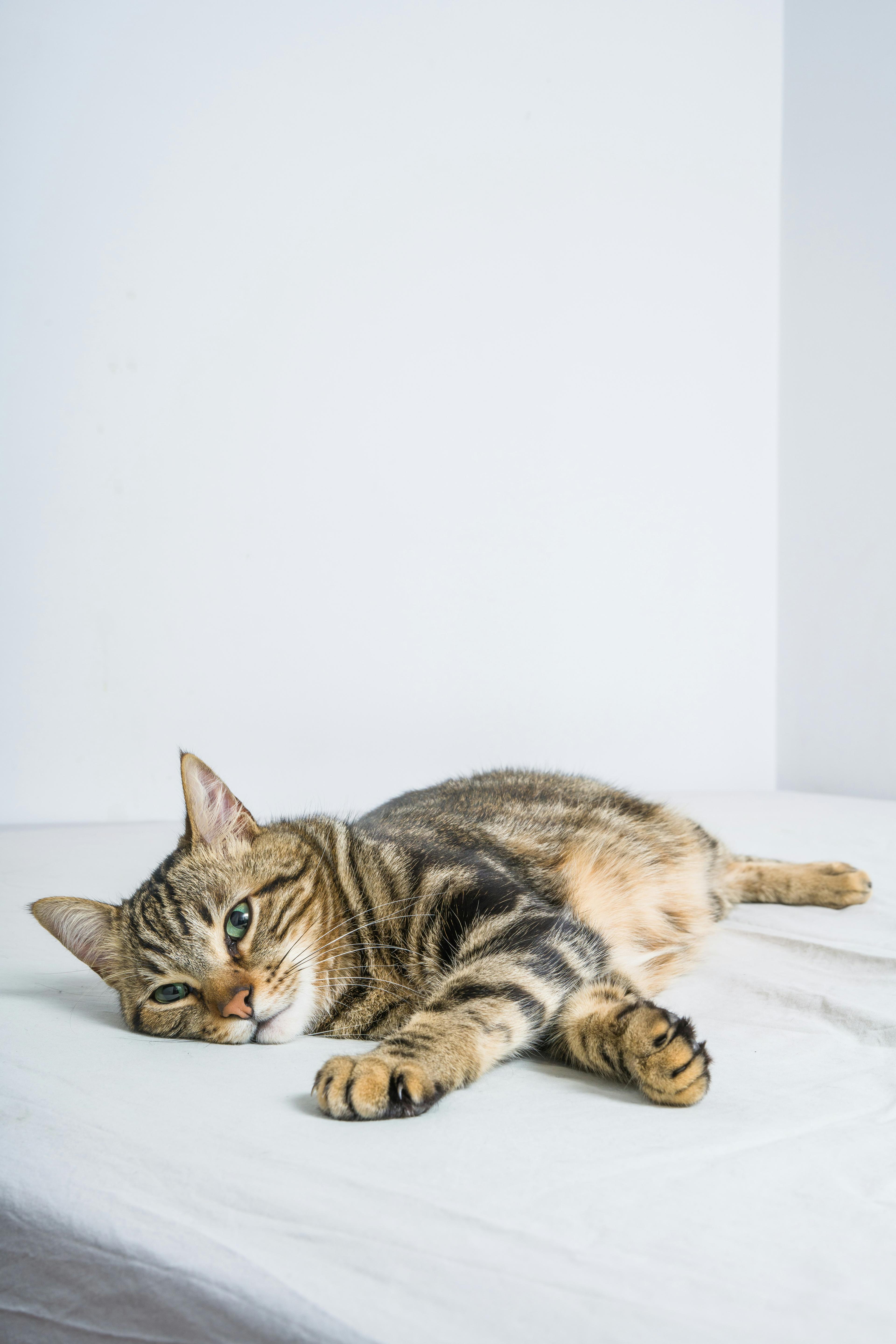
Cats have scent glands on their cheeks, chin and the top of their head. When your cat pushes the top of its head into your hand, your leg, or another cat, it is doing two things at once: leaving its scent on you, and taking in yours. Behaviourists call the gentle version bunting. It is a social gesture, offered to family members and trusted people, and it is a good sign.
What bunting is telling you
- You are part of the group. Cats bunt the things and people they consider safe.
- It is a request, not just a statement. Many cats bunt right before asking for food, a lap, or a door to be opened.
- It builds a shared "colony scent". A multi-cat home that grooms and bunts each other is usually a settled one.
When head contact is a warning sign, not affection
There is a completely different behaviour that looks similar for a second and means the opposite: head-pressing, where a cat pushes the top of its head hard against a wall, a corner, or the floor and holds it there, often while standing still or pacing.
Head-pressing can be a sign of a neurological problem, high blood pressure, or a toxin. It is not normal and it is not affection.
If your cat is pressing its head into a hard surface and holding it, or doing it repeatedly, treat it as urgent and call your vet the same day.
Quick guide
| Looks like | Probably means |
|---|---|
| Soft push of the head into your hand, purring | Bunting, affection |
| Rubbing the cheek along a doorframe | Scent-marking territory, normal |
| Forehead pressed hard into a wall, held, repeated | Head-pressing, see a vet urgently |